
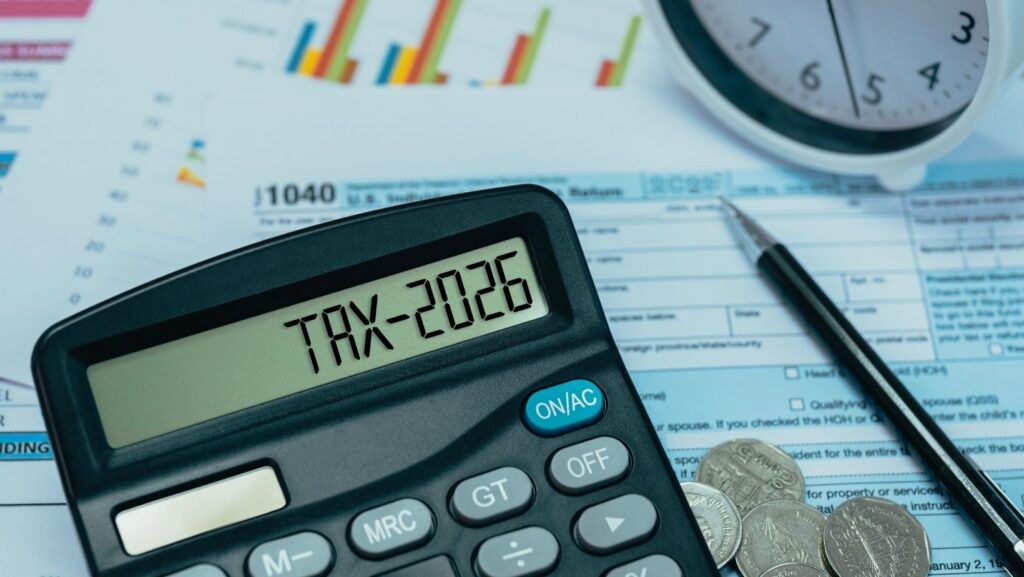
With finance evolving at breakneck speed and on track to reach another milestone in 2026, there has been a tremendous and likely unexpected evolution of the accounting function. Today’s accountants are not sitting in dark cubicles processing numbers. They are the strategic business partners of individuals and businesses, including those with interests in Muay Thai Online Betting and other forms of venture capital.
This evolution to accountancy as a profession requires a more broad-based contact with and understanding of the digital economy and associated regulation. In an economy that is literally digitizing by the day (or faster), accountants will not survive unless they are fluent with the latest regulatory and software tools.
Automation and AI in Auditing
By 2026, Mid and large scale accounting firms will begin incorporating AI technology in their work and adopting AI technology beyond the hype phase. Most of the routine data entry will begin being managed by autonomous systems.
How AI Acounting Improves Precision
In 2026, the AI tools obtainable will be able to conduct predictive reconciliation, which means the software will be able to predict the upcoming reconciliation discrepancies by studying the patterns of the past.
The data entry personnel will be needed less and less, as more and more automation will be doing the routine data entry and data entry personnel will be able to work on higher order analysis. Instead of looking for missing decimal points, analysts will be working on more data and doing more analysis to determine the future of the business.
It will be a great relief for a lot of people, as, honestly, everyone hates manual data entry.
Real-time Reporting in Finance and Blockchain Technology
Waiting for the ‘month-end close’ is a thing of the past. Monthly closes will be a thing of the past starting from 2026 due to the new integration of blockchain.
2026 Accounting and the Advantages of Real Time Data
The new integration of ‘Continuous Accounting’ and distributed ledger technology will include the following regarding the new accounting data management:
- Ever-present Transparency: Stakeholders will be able to see real-time transaction records on a private blockchain and access an audit trail that is immutable.
- Triple Entry Bookkeeping: Besides the debits and credits that get recorded, a third entry is created on the blockchain for the automatic verification of the transaction of the two parties.
- Decreased Likelihood of Fraud: Because past records cannot be changed undetected, it will be extremely difficult to engage in the traditional “cooking of the books” fraud practice.
- Improved Speed of Decisions: Instead of waiting three weeks for a report, business owners will be able to see their exact cash position on Tuesday at 2:00 PM
Remote Accounting Infrastructure and Cybersecurity
By 2026, the term “office” has vastly expanded in scope. With accounting firms par exellence remote, the workplace risks have evolved from the physical to logical.
Protecting Sensitive Financial Data
Cybersecurity has become an essential area of competency for accounting professionals. Encryption and multi-factor authentication (MFA) are just the beginning. ‘Accountant-Specific Phishing’ has become an area of specialization in the 2026, with elaborate AI-generated deep fake attacks aimed specifically at financial professionals.
In response, many firms have implemented ‘Zero Trust’ systems, so that every access request must be authenticated regardless of source. Data breaches are the real headache; so, we must be ready to log on.
ESG Reporting: The New Gold Standard
By 2026, Environmental, Social, and Governance (ESG) reporting is as important as the balance sheet. Investors are looking beyond profit, and are increasingly interested in the ‘carbon cost’ of that profit.
Accountants must now quantify “Green Assets” and “Carbon Liabilities.” This requires detailed computations around the company’s total footprint, including emissions from the supply chain. Most jurisdictions impose severe tax penalties on companies that do not comply with their ESG commitments. Thus, today’s accountants must be part environmental scientist and part social engineer.
Personalized Financial Advisory Services
As tasks that people consider boring and repetitive are automated, the market for personal, human-centered financial advisory service has increased rapidly. In 2026 rather than paying for a tax return, clients will be paying for a tax and financial advisory roadmap.
Accountants have transformed their roles and are becoming something like life coaches for business owners. They are guiding them through the complexities of the global economy, integration of crypto-assets, and legacy planning. AI hasn’t yet been able to replicate the human touch that understands the fears, aspirations, and personal ethics of clients. With their life savings at stake, people want to speak to a human.
Cloud-Native Platforms and Scalability
In 2026 any accounting software that is not “Cloud-Native” is practically prehistoric. The newest advancements in cloud technology are allowing for a phenomenon called “hyper-scalability.”
- Microservices Architecture: Accounting platforms can be viewed as built in “chunks.” This means that accounting software firms can choose to add individual pieces like international tax modules or country-specific payroll.
- API Ecosystems: Your accounting software can now be connected to your bank and your inventory and e-commerce systems without the need for a software bridge.
- Cost Efficiency: The same powerful analytics tools that Fortune 500 companies use are now available to small businesses for a fair subscription price.
The Changing Responsibilities of an Accountant
In conclusion, the role of an accountant in 2026 will look completely different compared to 10 years ago. This is a profession that will require continual education, as well as the ability to learn new technologies quickly. We have transitioned from being historians of the financial past to being architects of the financial future.
The prime examples of the evolution in the profession include:
- Technological Fluency: Simple computer literacy is not enough. An understanding of data organization and the logic of artificial intelligence is essential.
- Strategic Planning: Rather than focusing on what happened in the past, the future is primary. This shifts the question from, “What happened last year?” to “What happens next?”
- Ethical Oversight: As the level of automation increases, the need for accountants to serve as ethical guardians rises. The risk of AI making unethical and illegal financial determinations increases as automation increases.
- Flexibility: Tax legislation in 2026 is expected to change almost every three months because of the rapidly evolving digital economy. This will require constant monitoring.
There are many noticeable changes in the industry that signal potential growth. The future does seem completely positive for accounting as long as the changes are tracked and the understandings of the shifts are maintained.
In the upcoming 2026, data will become essential in determining how valuable an organization is. Therefore, increased caution is advised when considering functionality of software and integrity of passwords. In addition, everyone is encouraged to take intentional time away from a computer. Even the best technology should be supplemented by a qualified modified human review to make decisions to approve every action taken.